Popular Now










Most players don’t fall behind in Rust because they lose gunfights. They fall behind because they make dozens of small decisions that quietly slow their progress from the first five minutes of a wipe. Choosing the wrong place to spawn, recycling at the wrong monument, building a base before collecting enough resources, or chasing fights with primitive weapons can leave you hours behind players who seem to be moving at double your speed.
After enough wipes, one pattern becomes obvious. The strongest players aren’t necessarily the best shooters. They simply waste less time. Every trip outside the base has a purpose, every inventory slot matters, and every risk has a reward worth taking. That’s the mindset this guide focuses on. Instead of giving random survival tips, it explains how experienced Rust players think from the moment they wake up on the beach until they’re running endgame monuments.
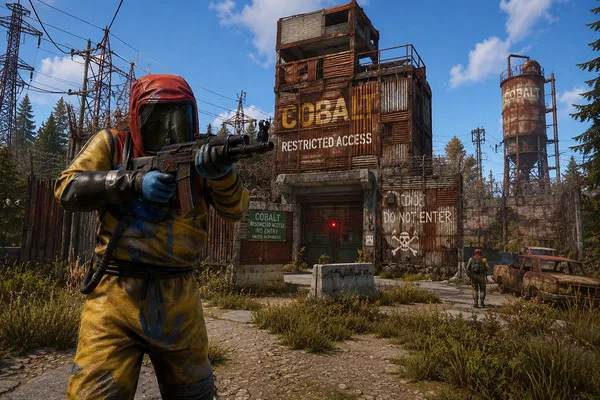
If you’re completely new, reading Rust beginner guide alongside this article will make many of the early concepts easier to understand. If you’ve already survived a few wipes but still struggle to keep pace with veteran players, this progression roadmap should help identify exactly where you’re losing momentum.
Why Progression Matters More Than Combat Skills
Winning fights feels good, but efficient progression wins servers. A player with average aim and excellent decision-making will usually outperform someone with incredible mechanical skill who wastes resources or picks unnecessary fights.
One mistake that almost everyone makes early on is believing that every encounter is worth taking. In reality, Rust rewards patience far more often than aggression. Walking away from a risky fight while carrying enough Scrap to unlock a Tier 2 Workbench is usually the smarter play than gambling everything for one extra weapon.
Experienced players naturally prioritize actions that continue accelerating their progress. A typical decision-making process looks something like this.
| Situation | Common New Player Choice | Experienced Player Choice |
|---|---|---|
| Finds 200 Scrap | Looks for PvP | Unlocks critical blueprints first |
| Sees another player | Immediately attacks | Evaluates gear, positioning, and potential reward |
| Builds first base | Builds wherever convenient | Chooses a location based on monuments and long-term farming routes |
| Gets a firearm | Roams immediately | Secures resources before risking expensive gear |
Table 1. Decision-making differences between new and experienced Rust players.
Note: The strongest Rust players constantly balance risk against progression rather than chasing every opportunity.
One wipe made this especially clear. A neighboring team spent nearly an hour fighting over a roadside monument, trading kills back and forth without gaining much. During the same time, another small group quietly recycled components at quieter monuments, upgraded to metal doors, unlocked essential blueprints, and already had electricity running before sunset. By the second day of the wipe, the outcome was obvious. The team with fewer kills controlled the area because they had invested in long-term progression instead of short-term excitement.
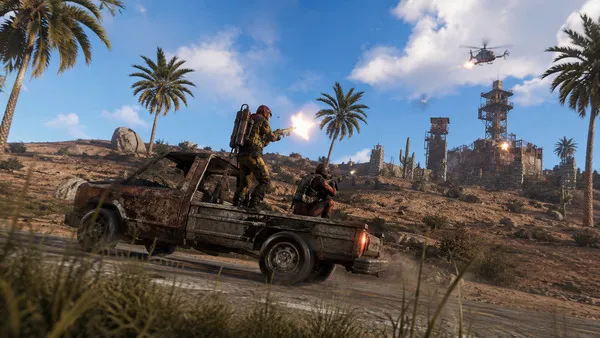
Understanding this difference also changes how you approach Rust scrap farming, because collecting resources isn’t the real objective. The objective is reaching the next stage of progression before everyone else.
The biggest shift in mindset is simple: every action should move your account forward. If it doesn’t improve your economy, security, or technology, it’s probably a distraction.
The First Hour Sets the Pace for the Entire Wipe
The opening hour has more impact than most players realize. Recovering from a slow start is possible, but it usually requires much more effort than simply making better decisions from the beginning.
Many beginners spend too much time searching for the “perfect” base location. Veteran players usually accept a good enough location, establish an airlock quickly, secure essential storage, and start farming immediately. A small protected base with steady income is almost always stronger than an unfinished dream base sitting on an exposed hill.
The priorities during the first hour should remain remarkably consistent.
- Secure food and cloth to eliminate basic survival problems.
- Collect enough stone and wood for a protected starter base.
- Build sleeping bags before exploring dangerous areas.
- Begin gathering components instead of focusing only on raw materials.
- Recycle efficiently to build an early Scrap advantage.
- Unlock blueprints that increase future efficiency rather than immediate firepower.
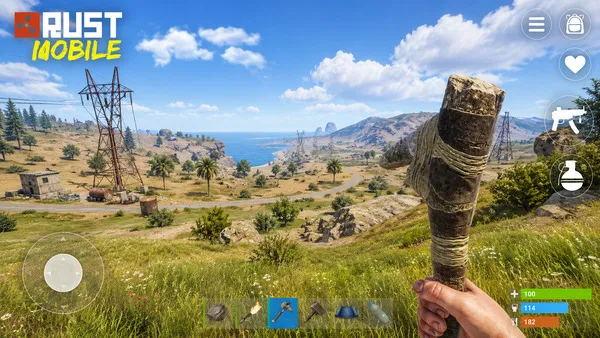
This order surprises many new players because guns aren’t near the top of the list. That’s intentional. Plenty of wipes are lost because someone crafted an early revolver while still living behind wooden doors.
Choosing where to live also deserves more thought than many guides give it. Living directly beside a high-tier monument sounds exciting until heavily geared clans start roaming through the area every few minutes. On the other hand, building too far from useful monuments creates another problem: every farming run becomes longer, riskier, and less profitable.
A balanced location usually offers three advantages.
| Base Location Feature | Why It Matters Early |
|---|---|
| Road access | Reliable component farming |
| Nearby low or mid-tier monument | Consistent Scrap income without constant PvP |
| Forest or rock cover | Safer movement and easier base concealment |
Table 2. Characteristics of a strong early-game base location.
As progression continues, you’ll naturally transition toward stronger defenses, electricity, and advanced loot routes. That’s where Rust monument guide and Rust base building guide become valuable, because surviving the first hour is only the beginning. Maintaining momentum through the rest of the wipe is what separates players who merely survive from those who quietly take control of an entire region.
Build a Base That Protects Your Progress, Not Your Ego
A successful base isn’t the biggest one on the map. It’s the one that costs more to raid than it’s worth. That’s an important distinction because many players still judge a base by how impressive it looks instead of how effectively it protects their progression.
One lesson that usually comes after several painful wipes is that every extra floor, external wall, or fancy shooting floor increases your maintenance costs. Unless those upgrades actually discourage raiders or improve your daily gameplay, they’re often just expensive decorations.
Small, compact bases consistently outperform oversized compounds during the early and middle stages of a wipe. They require fewer materials, are easier to defend, and can be upgraded much faster. A simple stone base with an airlock and properly protected Tool Cupboard is often safer than an unfinished castle with exposed weaknesses.
Before expanding your base, make sure you’ve already secured these essentials.
| Priority | Why It Matters |
|---|---|
| Airlock | Prevents players from walking into your base after opening a door. |
| Tool Cupboard protection | Stops enemies from taking over after breaking inside. |
| Metal doors | Significantly increase raid cost compared to wooden doors. |
| Separate loot rooms | Reduces losses if raiders only reach part of the base. |
| Honeycomb | Forces attackers to spend more explosives. |
Table 3. Defensive upgrades that provide the highest value during early progression.
One common mistake is upgrading walls before upgrading doors. Experienced raiders almost always look for the cheapest path, and wooden doors practically advertise where to start. Even a fully stone base becomes an easy target if the entrances remain weak.
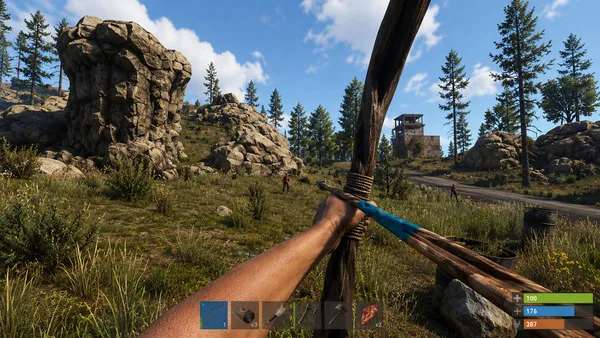
This is also why many experienced solo players rely on compact bunker designs rather than giant compounds. If you’re interested in layouts that maximize raid cost without consuming excessive resources, Rust solo base and Rust bunker base cover several proven designs worth studying.
Building smarter is rarely about adding more pieces. It’s about forcing every rocket, Satchel Charge, or C4 to feel like a bad investment.
Farm With a Goal, Not Just a Full Inventory
The fastest players don’t collect more resources than everyone else. They simply collect the right resources at the right time.
A new player often spends thirty minutes filling every inventory slot with stone, sulfur, wood, and metal fragments because gathering feels productive. Meanwhile, an experienced player may return home with half an inventory yet make twice as much progress because every component directly supports the next upgrade.
Thinking in terms of objectives instead of quantities completely changes how you farm.
Instead of asking, “What can I gather?”
Ask, “What unlocks my next milestone?”
For example, if your next objective is a Tier 2 Workbench, every farming run should prioritize Scrap and recyclable components. If you’re preparing for your first raid, sulfur suddenly becomes more valuable than extra stone. Context changes everything.
The table below illustrates how priorities naturally evolve throughout a wipe.
| Progress Stage | Highest Priority | Secondary Priority | Lower Priority |
|---|---|---|---|
| First Hour | Cloth, wood, stone | Components | Sulfur |
| Early Game | Scrap | Metal fragments | Stone |
| Mid Game | Sulfur | High Quality Metal | Scrap |
| Late Game | Explosives | High-end components | Basic resources |
Table 4. Resource priorities change as your progression advances.
Note: These priorities assume a typical official server. Community servers with boosted rates may require different strategies.
Another habit that separates experienced players is refusing to recycle immediately after every run. Recycling is where many promising wipes end because monuments attract opportunistic players looking for easy kills.
Sometimes carrying components home first is the better decision, especially if you’ve already secured enough Scrap for your current objective. Greed is responsible for more deaths than bad aim.
The strongest farming routes also avoid unnecessary detours. Instead of wandering randomly across the map, experienced players create loops connecting roads, low-risk monuments, and safe return paths. Over the course of a three-hour session, eliminating just two unnecessary trips can save enough time to complete several additional farming runs.
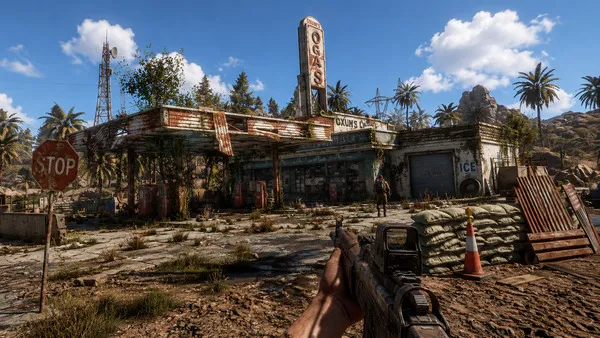
If efficient resource gathering is slowing your progression, spending time with Rust farming routes and Rust monument guide is often more valuable than practicing recoil patterns. Better decisions outside combat frequently produce stronger gear than winning one extra gunfight.
At some point every wipe reaches a turning point where farming alone is no longer enough. Progress starts depending on choosing the right fights, investing in better weapons, and knowing exactly when it’s worth risking everything for higher-tier loot. That’s where progression becomes less about gathering resources and more about making intelligent strategic decisions.
Fight Only When the Reward Matches the Risk
The players who dominate a server aren’t constantly looking for fights. They’re constantly looking for favorable fights. That sounds like a small difference until you’ve spent enough time in Rust to realize that every death costs far more than a weapon. It costs time, map control, momentum, and sometimes an entire evening of progress.

One habit that develops naturally after hundreds of hours is evaluating every engagement before firing the first shot. Is the enemy carrying valuable loot? Are there teammates nearby? How close is your base? Can another squad hear this fight? These questions usually matter more than whether your aim is perfect.
An easy trap for newer players is treating every firearm like permission to roam. In reality, the first SAR or Thompson often represents weeks of accumulated resources during a fresh wipe. Losing it in a low-value fight rarely makes sense.
A useful way to evaluate engagements is through expected value rather than confidence.
| Situation | Risk | Potential Reward | Usually Worth It? |
|---|---|---|---|
| Primitive player farming trees | Low | Very low | Usually no |
| Player leaving a recycler | Medium | High | Often yes |
| Large clan near their compound | Very high | Unpredictable | Usually no |
| Solo player returning from Oil Rig | High | Very high | Depends on positioning |
| Random gunshots across the map | Unknown | Unknown | Rarely |
Table 5. Evaluating PvP opportunities based on long-term progression rather than excitement.
Notice that none of these decisions depend solely on weapon strength. Information is often more valuable than firepower. Simply observing another player’s route for thirty seconds can reveal whether they’re carrying components, farming sulfur, or returning from a monument.
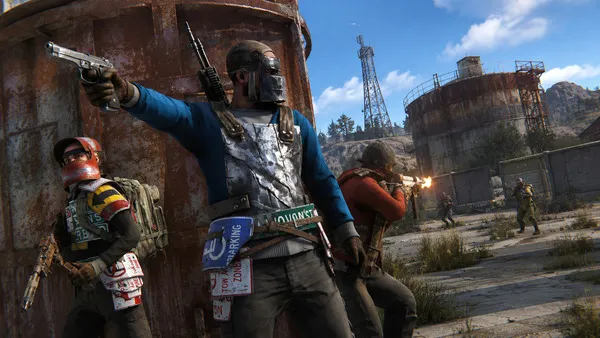
Players who want to improve mechanically should absolutely spend time with Rust PvP tips and Rust best weapons, but mechanical skill becomes much more effective when paired with intelligent decision-making. Winning fewer but higher-value fights almost always produces faster progression than chasing every opportunity.
At higher levels of play, patience starts looking like confidence. Experienced players are perfectly comfortable letting someone walk away if the fight doesn’t improve their position.
Know When to Push Into Endgame Content
The biggest mistake players make after reaching Tier 2 isn’t staying poor. It’s pretending they’re already rich.
As soon as someone crafts their first decent weapon, it’s tempting to head straight for Oil Rig, Cargo Ship, or Bradley APC because those are the landmarks everyone talks about. The problem is that these monuments don’t simply reward confidence. They punish poor preparation.
Running Oil Rig with inadequate healing, weak ammunition reserves, or no escape plan usually ends the same way. Even if the scientists don’t kill you, another team often finishes the job before the locked crate opens.
Instead of asking whether you’re capable of clearing an event, ask whether you’re capable of surviving everything that happens afterward.
Preparation matters far more than many guides admit.
| Monument or Event | Minimum Preparation | Biggest Hidden Threat |
|---|---|---|
| Harbor or Satellite Dish | Basic weapons and healing | Nearby players hearing gunfire |
| Train Yard | Radiation protection and inventory space | Multiple entrances for ambushes |
| Oil Rig | Reliable firearms, healing, extra ammunition | Counter-raiding teams |
| Cargo Ship | Mobility and sustained combat supplies | Limited escape options |
| Bradley APC | Large explosive investment | Third-party players waiting nearby |
Table 6. Endgame activities require preparation beyond combat ability.
One memorable wipe demonstrated this perfectly. Two neighboring groups rushed Large Oil Rig within the first day, hoping for an early advantage. Both teams wiped each other out before the locked crate even finished counting down. A quieter duo arrived later, looted what remained, secured the crate with almost no resistance, and left with enough equipment to dominate the following days. They didn’t have better aim. They simply chose better timing.
Timing is an underrated mechanic in Rust because the server itself has rhythms. Monuments are busiest immediately after wipe, recyclers become dangerous during peak player hours, and high-value events often attract multiple groups at predictable times. Learning those rhythms creates opportunities that don’t appear on the map.
This is why experienced players rarely rush every objective. Sometimes waiting ten minutes is worth more than carrying another assault rifle.
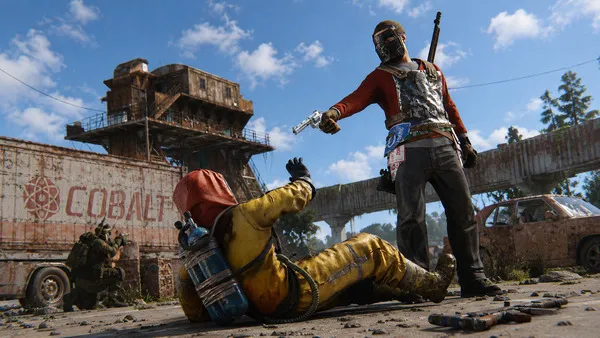
If you’re preparing to challenge the game’s highest-value locations, Rust Oil Rig guide explains efficient scientist clears and loot priorities, while Rust Cargo Ship guide covers positioning, escape routes, and common mistakes that cost players fully loaded inventories.
Endgame progression isn’t unlocked by reaching a certain Workbench level. It’s unlocked when your judgment catches up with your equipment. The strongest players don’t enter dangerous monuments because they’re eager for action. They enter because every piece of preparation tells them the odds are finally in their favor.
The Best Rust Players Spend Less Time Recovering
The biggest difference between average and experienced players isn’t how quickly they progress. It’s how quickly they recover when everything goes wrong.
Every Rust player eventually loses a base, gets offline raided, or dies while carrying what felt like an entire wipe’s worth of loot. Those moments are unavoidable. The players who continue dominating the server are the ones who already have a recovery plan before disaster strikes.
A veteran rarely stores every weapon in one room, crafts their last piece of sulfur into rockets, or walks around carrying every valuable item they own. They assume they’ll lose something eventually, so they build systems that make recovering painless.
A surprisingly effective habit is thinking one wipe ahead instead of one fight ahead.
| Good Recovery Habit | Long-Term Benefit |
|---|---|
| Keep hidden backup kits | Return to roaming within minutes after dying |
| Store resources in multiple loot rooms | Reduce losses during raids |
| Save extra components | Faster rebuilding after setbacks |
| Maintain spare sleeping bags | Regain map control quickly |
| Avoid spending every resource immediately | Stay flexible when priorities change |
Table 7. Habits that reduce recovery time after major setbacks.
One memorable wipe ended with an overnight raid that destroyed almost everything. The neighboring clan celebrated in chat, assuming the server was theirs. By the following evening, a small backup base hidden several grids away had already become the new headquarters because essential blueprints, spare tools, and reserve materials had never been stored in one place. Losing the main base hurt, but it didn’t end the wipe.
That’s an important mental shift many players never develop. Progress in Rust shouldn’t depend on one building. It should depend on knowledge, preparation, and repeatable habits.
If you’re already comfortable surviving early game, improving your resilience through Rust base building guide and Rust raid guide will usually have a bigger impact than learning another recoil pattern.
Every Wipe Teaches the Same Lesson
The best strategy in Rust changes from server to server, but one principle never does: smart decisions compound.
It’s easy to remember the spectacular moments. Winning a five-player fight with a revolver. Stealing an Attack Helicopter crate. Escaping Oil Rig with a full inventory. Those memories are exciting because they’re rare.
The quieter decisions are the ones that actually shape a wipe.
Choosing to recycle later.
Skipping a bad fight.
Building one grid farther from a dominant clan.
Leaving with enough loot instead of staying for “just one more crate.”
Those decisions don’t create highlight clips, but they consistently create stronger accounts.
After enough hours, Rust starts feeling less like a survival game and more like resource management under constant pressure. Every bullet fired has an opportunity cost. Every farming run competes with exploration. Every raid risks weeks of accumulated progress.
Players who understand this rarely ask, “What’s the strongest weapon?”
Instead, they ask questions like:
- What’s the smartest investment right now?
- What’s the safest way to gain an advantage?
- What’s the minimum risk needed to reach the next milestone?
Those questions produce better outcomes across hundreds of wipes because they’re focused on efficiency instead of emotion.
If you’ve followed this progression guide from beginning to end, you’ll probably notice one recurring theme. Almost every recommendation revolves around reducing unnecessary losses while maximizing meaningful progress. That’s exactly how experienced players approach Rust after thousands of hours. They aren’t trying to play perfectly. They’re simply making slightly better decisions, hundreds of times over the course of a wipe.
Frequently Asked Questions
Is the Tool Cupboard more important than upgrading walls?
Yes. A well-protected Tool Cupboard prevents enemies from taking over your base after breaking inside. Upgrading stone walls while leaving the Tool Cupboard exposed creates an expensive base with an obvious weakness. If base security is still confusing, Rust base building guide explains how experienced players prioritize defensive upgrades.
When should I unlock Tier 2 Workbench?
As soon as your Scrap income becomes reliable. Rushing Tier 2 without enough resources to craft useful items often slows progression, but delaying it for too long limits access to stronger weapons, armor, and utilities.
Is Oil Rig worth running as a solo player?
Yes, but only when you’re properly prepared. Solo players usually succeed by choosing quieter timing, bringing enough healing supplies, and leaving before greed creates unnecessary risks. Planning matters more than mechanical skill.
Should I learn every weapon recoil pattern?
Not immediately. Good positioning, patience, and intelligent engagements produce more wins than perfect recoil control for most players. Mechanical skill becomes much more valuable once your progression habits are already solid.
Why do experienced players seem richer even when they farm less?
Because they waste fewer resources. Efficient players avoid unnecessary fights, minimize travel time, recycle strategically, and spend materials only when those investments improve future progression.
Why do I always fall behind after the first day of a wipe?
The problem is usually decision-making rather than speed. Small mistakes during the opening hour compound throughout the wipe until other players begin unlocking stronger technology much earlier.
Should I fight for every monument I find?
No. Many monuments aren’t worth contesting if heavily geared teams already control the area. Sometimes rotating to a lower-tier monument produces more Scrap with significantly less risk.
Is building close to high-tier monuments always a good idea?
Not necessarily. Living beside valuable monuments increases loot opportunities but also attracts stronger players. A slightly quieter location often leads to more consistent progression over an entire wipe.
What’s the fastest way to progress without joining a large clan?
Focus on efficient Scrap farming, compact base designs, and avoiding unnecessary PvP. Staying alive with consistent progress almost always outperforms chasing high-risk fights.
How do I know when it’s time to stop farming and start raiding?
Start considering raids when you already have stable income, replacement gear, and enough sulfur to absorb potential losses. Raiding too early often delays progression instead of accelerating it.
Why do good players leave monuments before clearing every crate?
Because they recognize diminishing returns. The first valuable loot is usually worth securing immediately, while staying longer dramatically increases the chance of being countered.
What’s the single habit that improves Rust progression the most?
Treat every decision as an investment. Before farming, fighting, crafting, or raiding, ask whether that action moves you closer to your next milestone. Players who consistently make decisions with long-term progression in mind almost always outperform players who simply react to whatever happens around them.