Popular Now









Most EA Sports FC 25 tips fall into one of two categories. They’re either so obvious that they don’t change how you play, or they’re aimed at elite players who already know the game’s mechanics inside out. Neither approach helps someone who’s stuck in Division 6, keeps conceding late goals, or feels like every online match follows the same frustrating pattern.
After spending enough time across Career Mode, Ultimate Team, and Rivals, one thing becomes clear: the gap between average players and consistently good players isn’t built on flashy skill moves. It’s built on small decisions repeated dozens of times in every match. A smarter first touch, a better defensive angle, or simply waiting one extra second before making a pass often has a bigger impact than learning another five-star dribbling combo.
This guide focuses on those small details. These are practical EA Sports FC 25 tips and tricks that are easy to apply, backed by situations you’ll encounter almost every match. You won’t suddenly start winning every game overnight, but you’ll understand why experienced players seem to control matches even without doing anything spectacular.
Think One Pass Ahead Instead of One Touch Ahead
The easiest way to improve your attacking play is to stop thinking about your current pass and start thinking about the next one.
Many new and intermediate players react to what’s happening on screen. Better players usually anticipate what will happen two or three seconds later. That difference may sound small, but it completely changes how an attack develops.
Imagine receiving the ball with your central midfielder. Most players immediately look for the safest pass available because they’re worried about losing possession. Experienced players glance ahead before the ball even arrives. They already know where the winger is moving, whether the striker is checking toward the ball, and which defender is about to step forward.
That extra awareness creates smoother attacks without requiring faster reactions.
A habit that helped considerably after dozens of online matches was checking the mini-map more often. It sounds simple, yet many players barely use it. The mini-map often reveals an overlapping full-back or an unmarked winger long before they enter the camera view. Once that becomes second nature, switching play feels much more natural instead of forced.
This doesn’t mean every attack needs five or six passes. Sometimes the direct ball is absolutely the right decision. The key is recognizing the difference between an opportunity and a gamble.
The table below shows a few situations that appear repeatedly during matches.
| Match Situation | Common Beginner Decision | Smarter Decision |
|---|---|---|
| Midfield under pressure | Force a through ball | Keep possession with a short pass |
| Winger isolated | Attempt a difficult dribble | Wait for overlapping support |
| Opponent pressing high | Pass into crowded areas | Switch play to the opposite side |
| Counterattack with space | Slow down too much | Attack quickly before defenders recover |
Table 1. Comparing reactive decisions with more effective attacking choices.
Note: Good decision-making doesn’t always produce an immediate goal, but it consistently creates better scoring opportunities over an entire match.
Football is a game of creating advantages rather than forcing miracles. Once you begin thinking one pass ahead, your attacks become calmer, more varied, and much harder to defend.
If you’re still getting comfortable with the basics, our EA Sports FC 25 Beginner Guide explains the core gameplay concepts that make these decisions easier to understand.
Sprint Less to Attack Faster
It sounds backwards, but one of the fastest ways to become a better attacker is using the sprint button less often.
This is probably the advice that surprises returning FIFA players the most. Older titles often rewarded constant pace, especially when quick wingers could simply outrun defenders. FC 25 still values speed, but acceleration alone rarely beats organized defending.
Watch what happens during a typical online match. A player wins possession, immediately holds sprint, reaches the halfway line, and runs directly into two defenders. The attack ends before it really begins.
Now compare that to someone who slows the game down for a moment. They take a controlled first touch, wait for teammates to move into position, then accelerate only after a passing lane opens. The attack reaches the penalty area with far less risk.
The second player isn’t attacking more slowly. They’re simply choosing a better moment to increase the tempo.
This becomes especially noticeable around the edge of the box. Defenders expect attackers to keep running forward, which makes them easier to predict. Pausing for a split second often forces a defender to step out of position, opening the exact space you were looking for.
Another overlooked detail is stamina. Sprinting constantly doesn’t just make your attacks predictable. It also leaves wide players exhausted by the final twenty minutes. Fresh legs matter much more than most beginners realize, especially in close online matches where one late run can decide the result.
Instead of treating sprint as your default movement speed, think of it as a tool with a specific purpose.
Use it to attack open space.
Use it after beating your marker.
Use it during a genuine counterattack.
Avoid using it simply because you have the ball.
One useful exercise is playing three or four matches while consciously reducing unnecessary sprinting. At first, the game almost feels slower. After a while, you’ll probably notice something unexpected: you’re creating cleaner chances despite making fewer explosive runs.
That shift usually marks the point where players stop relying on raw pace and start controlling the rhythm of a match.
Players looking to improve even further should also experiment with different camera angles. A wider view makes it much easier to spot open space before sprinting into it. Our Best Camera Settings Guide explains which camera options provide the clearest overview during attacking play.
The next area where experienced players separate themselves isn’t in attack at all. It’s how they defend. Learning when not to chase the ball is often worth more than any new dribbling trick, and that’s exactly where the next section begins.
Stop Chasing the Ball on Defense
The quickest way to concede goals in EA Sports FC 25 is trying to win the ball with every defender you control.
It feels natural to rush toward the attacker the moment possession changes. After all, taking the ball back as quickly as possible sounds like good defending. In practice, that’s exactly what experienced opponents hope you’ll do.
One of the biggest differences between average and high-level players isn’t tackling accuracy. It’s patience.
During online matches, there are countless moments where an opponent dribbles across the edge of the penalty area without looking particularly dangerous. Newer players often panic, pull a center back out of the defensive line, miss the challenge, and suddenly leave a huge gap for an easy through ball. Better players stay compact, continue blocking passing lanes, and wait for the attacker to make the first mistake.
That single change can completely transform your defensive record.
A useful habit is controlling your defensive midfielder whenever possible instead of immediately switching to your center backs. The midfielder can pressure the ball while the back line keeps its shape, making it much harder for the opponent to find space behind your defense.
Another detail that often goes unnoticed is body positioning. Running directly toward the ball carrier usually opens passing lanes on either side. Approaching at a slight angle forces attackers into less dangerous areas and gives teammates more time to recover.
This is especially important against players who rely heavily on through balls. They aren’t necessarily waiting for the perfect pass. They’re waiting for you to create it.
If defending continues to be your biggest weakness, it’s worth spending time with our EA Sports FC 25 Defending Guide, where positioning, player switching, and pressing techniques are covered in much more detail.
Learn to Recognize Safe and Risky Passes
Passing is simple. Choosing the right pass is what separates consistent players from inconsistent ones.
Most turnovers don’t happen because the pass itself was difficult. They happen because the decision behind it was poor.
It’s easy to become obsessed with creating spectacular attacks. Every time the striker starts running behind the defense, the temptation to play an ambitious through ball becomes hard to resist. Sometimes it works beautifully. More often, it rolls straight into the defender’s feet.
Experienced players don’t eliminate risky passes from their game. They become more selective about when to use them.
Imagine two nearly identical situations. In both cases, your striker begins making a forward run.
In the first scenario, your midfielder has plenty of time, no pressure, and a clear passing lane. Playing the through ball makes perfect sense.
In the second, two defenders are closing down while another midfielder blocks the passing lane. Forcing the same pass simply hands possession back to your opponent.
The difference isn’t technical ability. It’s judgment.
The table below highlights a few situations that appear regularly during matches.
| Situation | Recommended Decision | Why It Works |
|---|---|---|
| Heavy midfield pressure | Keep possession with short passes | Maintains control and resets the attack |
| Fast counterattack | Play an early through ball | Exploits open space before defenders recover |
| Winger isolated near the touchline | Switch play | Creates space on the opposite flank |
| Final third with crowded defenders | Recycle possession | Wait for a higher-quality opening |
Table 2. Choosing the right type of pass based on the match situation.
Note: The safest pass isn’t always the best option. The best decision depends on how much space, time, and defensive pressure you have.
One useful mindset is asking a simple question before pressing the pass button.
“If this fails, what happens next?”
If the answer is losing the ball thirty yards from your own goal, there’s probably a better option.
Developing that awareness takes practice, but it quickly becomes one of the biggest improvements in your overall gameplay.
Build Every Attack With Width
Many attacks fail before they even reach the penalty area because the entire team is trying to play through the middle.
This is one of the most common habits among players who feel they’re constantly running into crowded defenses. They move forward with their striker, pass into central midfield, attempt another short pass, and suddenly four defenders are standing within a few yards of the ball.
The pitch is much wider than it first appears.
Using that width forces defenders to make uncomfortable decisions. If they stay compact, your winger has room to receive the ball. If they move wide to stop the winger, gaps begin appearing in central areas.
Good attacking football is often about moving defenders rather than beating them.
One pattern that consistently works is switching play after drawing pressure to one side. For example, if you build an attack down the left flank and notice the opposition shifting across, a quick diagonal pass to the opposite full-back can completely change the situation.
This doesn’t always lead directly to a goal, but it frequently creates the extra second needed to deliver a better cross or find a teammate between the lines.
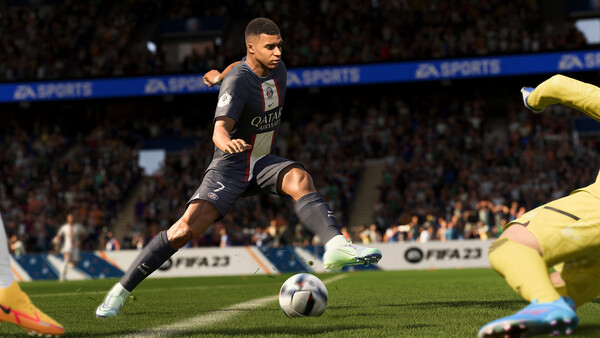
Camera settings also play a surprisingly important role here. A narrow camera makes it difficult to notice wide runners until they’re already marked. A wider angle provides much more information, making long switches and overlapping runs easier to spot.
If you haven’t experimented with camera options yet, our Best Camera Settings Guide explains which views offer the clearest picture of the entire pitch.
Another underrated aspect of attacking width is patience. There’s no need to force the first crossing opportunity you see. Sometimes recycling possession through your full-backs stretches the defense far more effectively than sending the ball into a crowded penalty area.
Players who consistently create high-quality chances usually aren’t attacking faster than everyone else. They’re making the defending team work harder by forcing them to cover every inch of the field.
By combining smarter passing decisions with better use of width, your attacks naturally become less predictable. The next step is understanding why many players blame their squad, their tactics, or even the game itself when the real problem is often something much simpler.
Stop Blaming Your Players
Buying better players feels like the fastest solution when you’re losing matches. Sometimes it helps, but it’s rarely the reason your results suddenly improve.
One pattern appears almost every year in Ultimate Team. Players spend weeks saving Coins for a higher-rated striker, expect instant success, then wonder why they’re still creating the same number of chances. The card changes, but the attacking decisions remain exactly the same.
That’s because player ratings only amplify good habits. They don’t replace them.
A clinical striker will finish more opportunities, but only if those opportunities exist in the first place. A faster winger can beat defenders more easily, yet running into three defenders at full speed still ends the same way regardless of who is carrying the ball.
After hundreds of matches, it becomes obvious that strong players rarely depend on one superstar. They rely on positioning, patience, and consistency. It’s not unusual to lose against someone using a modest squad simply because every attack is well constructed and every defender stays in the right place.
That doesn’t mean squad building is unimportant. It simply shouldn’t become an excuse for problems that are actually tactical.
If you’re beginning Ultimate Team, focus first on creating balance rather than chasing expensive names. A well-rounded team with reliable defenders and midfielders often performs better than one filled with elite attackers but obvious weaknesses elsewhere.
When you’re ready to improve your squad efficiently, our Best Starter Squad Guide explains how to get the most value without wasting Coins.
Play Every Match With One Learning Goal
One of the biggest differences between players who improve steadily and those who stay at the same level for months has nothing to do with mechanical skill.
It’s how they approach each match.
Many people queue for another game hoping that experience alone will make them better. While match time certainly helps, improvement happens much faster when every session has a clear objective.
For example, spend one evening focusing entirely on defending. Ignore your win-loss record and pay attention only to maintaining your defensive shape. The following day, shift your attention to creating better passing angles or keeping possession under pressure.
Breaking improvement into smaller goals makes mistakes much easier to identify. Instead of thinking, “I lost again,” you begin asking more useful questions.
Did I rush too many attacks?
Did I switch defenders too early?
Was I forcing passes that weren’t really available?
Those questions lead to progress because they highlight decisions you can actually control.
Professional players and content creators often review their own matches for exactly this reason. They’re not just looking for spectacular goals. They’re searching for repeated mistakes that quietly cost them possession or create unnecessary pressure.
Improvement becomes much less frustrating once every match has a purpose beyond simply winning.
Career Mode is an excellent environment for this type of practice because it removes much of the pressure associated with competitive online matches. If you haven’t explored it yet, our Career Mode Guide offers plenty of ways to develop both tactical awareness and decision-making.
Small Habits That Improve Your Results Immediately
Not every improvement requires hours of practice. Some habits make a noticeable difference after only a few matches because they reduce avoidable mistakes.
The following table summarizes several adjustments that experienced players make almost automatically.
| Habit | Why It Helps |
|---|---|
| Slow down near the penalty area | Creates higher-quality shooting opportunities. |
| Make substitutions around the 65th minute | Fresh players can exploit tired defenders. |
| Keep one midfielder behind the ball | Reduces dangerous counterattacks. |
| Use the mini-map regularly | Reveals passing options outside the camera view. |
| Reset mentally after conceding | Prevents rushed attacks and careless defending. |
| Switch play when one side becomes crowded | Forces defenders to cover more space. |
Table 3. Small gameplay habits that consistently improve match performance.
Note: None of these habits are difficult to learn individually. Their real strength comes from applying them consistently throughout an entire match.
One underrated trick is paying attention to your emotional state after conceding a goal.
Many players immediately try to equalize with the next attack. They force risky passes, overcommit defenders, and end up conceding a second goal within minutes. Experienced players usually do the opposite. They slow the game down, regain possession, and wait for the right opportunity instead of trying to score immediately.
Football matches often swing because of momentum, and momentum is influenced just as much by decision-making as it is by player ratings.
What Should You Learn Next?
If you’ve reached the point where these tips feel natural, you’ve already moved beyond the beginner stage.
The next step isn’t collecting random advice from different videos or forums. It’s choosing one area of the game and studying it in greater depth. Players who improve consistently tend to build knowledge piece by piece instead of trying to master everything at once.
A practical learning path looks like this.
| If You Want to Improve… | Read Next |
|---|---|
| Overall gameplay | EA Sports FC 25 Beginner Guide |
| Team shape and positioning | Best Formations Guide |
| Camera visibility and controls | Best Camera Settings Guide |
| Squad progression | Ultimate Team Guide |
| Building a competitive budget squad | Best Starter Squad Guide |
| Managing your club over multiple seasons | Career Mode Guide |
| Earning more currency efficiently | Coins Guide |
Table 4. Recommended reading order after mastering the gameplay basics.
Note: Each guide focuses on a different part of FC 25, making it easier to improve one skill at a time instead of feeling overwhelmed.
A common mistake is jumping straight into advanced custom tactics after watching professional gameplay. Those tactical setups work because experienced players already understand positioning and decision-making. Copying them without mastering the fundamentals rarely produces the same results.
Build a solid foundation first, then refine the details.
By this stage, you’ll probably notice that winning feels less random. Instead of relying on lucky bounces or individual brilliance, you’re creating better chances, defending with more confidence, and making smarter decisions throughout the match.
The final section answers the questions players ask most often once they reach this stage, including gameplay mechanics, tactical choices, and the fastest ways to keep improving without wasting time.
Frequently Asked Questions
What is the fastest way to improve in EA Sports FC 25?
The fastest improvement comes from making better decisions rather than learning advanced mechanics.
Focus on one area at a time. Spend a few matches improving your defending, then move on to passing or chance creation. Trying to fix everything at once usually leads to slower progress because it’s difficult to identify what’s actually changing.
Which formation is best for most players?
There isn’t a single perfect formation, but 4-3-3, 4-2-3-1, and 4-4-2 remain excellent choices because they provide balance in both attack and defense.
The right formation also depends on your squad and preferred style of play. If you’re still experimenting, our Best Formations Guide compares the strengths and weaknesses of the most popular tactical setups.
Should I use Skill Moves or focus on passing?
Passing should always come first.
Skill moves are useful in one-on-one situations, but they become much more effective after you’ve learned how to move defenders with simple passing combinations. A player with strong decision-making will usually outperform someone relying on constant dribbling tricks.
How important are camera settings?
Much more important than many players realize.
A wider camera gives you earlier information about overlapping runs, open teammates, and defensive positioning. That extra information improves passing decisions long before it improves your mechanics.
If you’re still using the default camera, it’s worth experimenting with the recommendations in our Best Camera Settings Guide.
Why do I keep conceding goals after scoring?
Many players become too aggressive immediately after taking the lead.
Instead of controlling possession, they continue attacking with the same intensity and leave unnecessary space behind their midfield. Slowing the tempo for a few minutes often makes it much harder for opponents to build momentum.
Why does every online match feel harder than Career Mode?
Online opponents adapt.
The AI generally follows tactical patterns, while real players quickly recognize repeated habits. If you always attack down one wing or attempt the same type of pass, experienced opponents will adjust within a few minutes.
Adding more variety to your attacks is usually more effective than changing your entire formation.
Is it worth changing custom tactics every week?
Usually not.
Many players copy professional tactics after every gameplay update, hoping for immediate improvements. In reality, understanding one tactical system deeply is far more valuable than constantly switching between different setups.
Consistency almost always beats constant experimentation.
Why do experienced players seem to have more time on the ball?
Because they create time before receiving possession.
Scanning the pitch, anticipating the next pass, and positioning themselves correctly makes the game appear slower. Their reactions aren’t necessarily faster; their decisions simply happen earlier.
What’s the biggest mistake intermediate players make?
Trying to play too quickly.
Once players become comfortable with the controls, they often rush attacks because they feel confident enough to force difficult passes. Ironically, slowing down often produces more scoring chances than increasing the tempo.
Should I buy better players or improve my gameplay first?
Improve your gameplay first.
A stronger squad certainly helps, but expensive cards can’t fix poor positioning, rushed passing, or inconsistent defending. Once your fundamentals improve, every squad upgrade becomes much more valuable.
Can I become competitive without spending money in Ultimate Team?
Yes.
Building a competitive club without purchasing FC Points takes longer, but smart squad building, completing objectives, and managing your Coins carefully are enough to remain competitive throughout the year.
Our Coins Guide and Best Starter Squad Guide are good places to begin if you’re building a budget team.
What should I learn after mastering these tips?
Once these habits become automatic, start focusing on one specialized area of the game.
A sensible progression is:
- Master your preferred formation.
- Learn advanced defending.
- Build a stronger Ultimate Team squad.
- Explore Career Mode tactics.
- Improve custom tactics and player instructions.
Learning each topic separately is far more effective than trying to absorb everything in a single weekend.
Conclusion
Most players don’t stay stuck because they lack talent. They stay stuck because they repeat the same decisions every match without realizing those decisions are costing them possession, defensive stability, and ultimately victories.
The encouraging part is that none of the improvements covered in this guide require elite reflexes or hundreds of hours of practice. Slowing down your attacks, defending space instead of chasing the ball, recognizing better passing options, and approaching each match with a clear objective are habits that anyone can develop.
Over time, those small adjustments begin to stack together. You concede fewer careless goals, your attacks become more controlled, and difficult matches start feeling manageable instead of chaotic. That’s usually the point where FC 25 becomes much more enjoyable, because you’re no longer relying on luck to create results.
If you’re continuing your journey, the next step depends on where you want to improve. Players interested in tactical depth should read the Best Formations Guide, while Ultimate Team fans can move on to the Ultimate Team Guide, Coins Guide, and Best Starter Squad Guide. If Career Mode is your favorite way to play, our dedicated Career Mode Guide covers everything from transfers to long-term squad development.
No single tip wins matches on its own. Winning consistently comes from combining dozens of good decisions over ninety virtual minutes, and that’s a skill that keeps paying off no matter which mode you play.